
How To Prevent Laboratory Spills?
Laboratory spill prevention refers to the storage, handling, and transfer precautions, covering both liquid chemicals and solid powders, that reduce the risk of hazardous spillages before they occur, since preventing a spill is safer and less costly than cleaning one up after it happens.
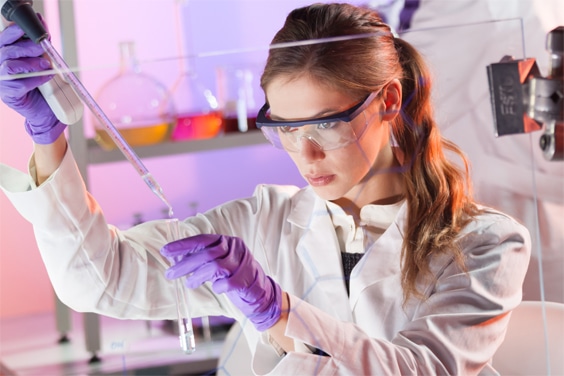
Undivided attention prevents laboratory spillages
Laboratory spills are a common occurrence. Spill management in the laboratory is an important aspect which cannot be overlooked by laboratory workers. The topic has been given adequate coverage in the online laboratory safety course. However, it is an accepted fact that ‘Prevention is better than Cure.’ In the present article some tips are offered to prevent spillages in the first place so that you do not have to look around for remedies when spill accidents have taken place.
A laboratory spill can have dangerous consequences as a laboratory can house substances ranging from corrosive liquids, flammable liquids, acids, cryogens, poisonous materials, hazardous microbiological bacteria to radioactive materials. The topic covers some preventive measures that can be adopted for prevention of liquid and solid spills.
Liquid Spills
- Ensure orderly storage of liquid chemicals on laboratory bench and wall shelves. The storage bottles should be easily accessible by workers of all heights.
- Bulk storage should be arranged in a separate storage area and after use solvents and other bottles should never be left on laboratory floor or passages.
- Always use funnels for transferring liquids to smaller capacity bottles or volumetric flasks.
- It is advisable to make use of solvent trays for carrying more than one volumetric flask or reagent bottle.
- Do not use cracked or broken glassware.
- Do not hold large volume volumetric flask (> 250 ml) or reagent bottles (> 500 ml capacity) by the neck. Always support the bottom with the second hand.
- Keep ground glass joints of burettes well greased so that leakages can be prevented during titrimetric analysis.
- Allow heated containers to cool to room temperature before transferring to other containers as handling hot surfaces can lead to accidents and dangerous spills.
- Use heat proof mittens when removing heated glass containers from hot air ovens.
- Use glass beads when boiling liquids to prevent bumping.
Solid Spills
Solid spills though generally not corrosive in nature have poisonous symptoms through oral or skin contact and potential spills can be prevented by adopting the suggested measures:
- Solid material packets should be tightly secured and sealed before transfer within the laboratory.
- Make use of a clean spatula for removing solid powders from bottles. Never tilt and shake a bottle to take out small quantities.
- Always cap bottles securely after use as partially secured bottles can lead to spillages while lifting or transfer of contents.
- Make use of watch glass or butter paper for weighing powders and handle carefully to avoid spills inside balance cabinets.
- Use funnels for transferring powders to volumetric flasks
It goes without saying that you should be fully alert and attentive when you handle laboratory chemicals and reagents. Always keep in mind that spills pose a greater hazard to your co-workers or visitors who would be ignorant about the nature and potential hazard of spilled materials. In return as responsible persons they should also not distract you when you are carrying out laboratory activities involving material handling and transfer.