
Why is it necessary to revalidate Working Standards?
Working standards are reference materials, validated against certified reference materials and used to report routine analysis results, that must be revalidated at prescribed intervals because their properties can change over time and using an expired or degraded standard’s potency value would make analytical results incorrect.
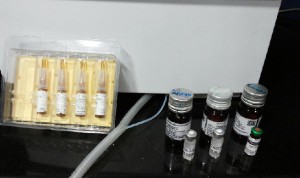
Working-Standards-For-HPLC-Analysis
Analysis results are always reported against working standards which have been validated against certified reference materials. A certified reference material is very expensive and is procured in small quantity from a standards body having global recognition. Due to the high cost it is not possible to use certified reference materials every time so a working reference standard is prepared bearing reference to the original certified reference material..
Always remember to use a working standard only during its validity as changes do take place in its properties over time. If you have entered the wrong potency of an expired standard in your calculations your analysis results are bound to go wrong. For this reason the working standards are always revalidated at prescribed intervals.
Changes in the characteristic properties of working standards are numerous and could result from:
- Non-maintenance of recommended storage conditions such as temperature and humidity which can lead to faster degradation of the standard
- Some light-sensitive materials undergo degradation due to exposure to light
- Contamination during use of unclean spatula and storage vial.
- Contamination due to return of used standard into the container after weighing.
Revalidation may include analysis of standard for assay, loss on drying, water content, physical description, solubility, heavy metals, sulphated ash, pH, specific optical rotation, melting point, and other characteristics as per requirements of individual standards.. After revalidation the records should be documented and the new standard stored in an amber coloured vials with proper labels giving standard details such as
Name
Working standard number
Assay
Date of preparation
Expiry date
Storage conditions
LOD/ water
Valid up to
Approved by
The shelf life of the working standard is fixed at one year from date of preparation but for some standards depending upon their characteristics the validity date can be different.
Access to working standards should be limited and a logbook maintained on usage of each working standard
If you take proper care on usage and storage of working standards they will remain stable during the validity and provide reliable results every time.
Please share your views and offer your comments on the article.
Why is it necessary to revalidate working standards?
A working standard's properties can change over time, and if the wrong potency of an expired standard is entered into calculations, the analysis results will be wrong, so working standards are revalidated at prescribed intervals to ensure they remain reliable.
Why do laboratories use working standards instead of certified reference materials for routine analysis?
A certified reference material is very expensive and procured in small quantity from a globally recognized standards body, so it is not practical to use it every time; instead, a working standard is prepared with reference to the original certified reference material for day-to-day use.
What can cause changes in the properties of working standards?
Changes can result from non-maintenance of recommended storage conditions such as temperature and humidity, degradation of light-sensitive materials from exposure to light, contamination from using an unclean spatula or storage vial, and contamination from returning used standard back into the container after weighing.
What does the revalidation of a working standard involve?
Revalidation may include analysis of the standard for assay, loss on drying, water content, physical description, solubility, heavy metals, sulphated ash, pH, specific optical rotation, melting point, and other characteristics as required for that particular standard.
What is the typical shelf life of a working standard?
The shelf life of a working standard is generally fixed at one year from its date of preparation, though for some standards the validity period can differ depending on their individual characteristics.
What records and storage precautions are needed for working standards?
After revalidation, records should be documented and the new standard stored in amber-coloured vials labelled with details such as name, working standard number, assay, date of preparation, expiry date, storage conditions, LOD/water, valid-up-to date, and approver, with access limited and a logbook maintained for usage.