
Why is physical examination of samples important prior to analysis?
Physical examination of samples is the visual and physical inspection of a laboratory sample, such as confirming that liquids are homogeneous and free of suspended matter, or that solids are uniformly colored and finely powdered, performed before analysis to confirm the sample is representative and homogeneous, since analysis results are authentic only if this is the case.
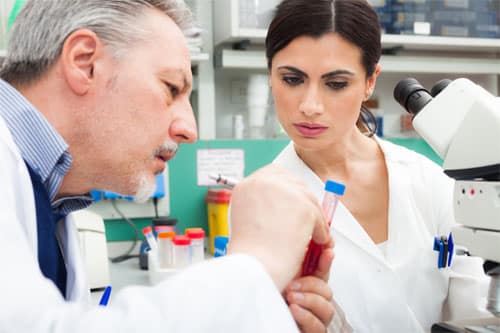
Sample observation prior to analysis
Analysis results are authentic only if the samples taken for analysis are representative of the whole. A sample represents a bulk quantity such as sea water, river, lake water, rock from a mining site, tissue or body fluid from a living being, raw material consignment or finished product representing a manufactured product. It is necessary to ensure that the sample is homogeneous and representative of the bulk material it represents.
Liquids
- Samples are collected and stored in clean and sterilized vessel or vial
- The samples should be homogeneous and there should be no tendency to separate into different layers
- Samples should be clear and free of suspended matter and there should also be no solid deposits at the bottom of the container
Solids
- Samples should be in a fine powder state as lumps or granules represent non- homogeneity in terms of moisture or residual solvents content
- There should be uniformity of colour of samples as different coloured zones represents compositional variations and require further homogenization before analysis is undertaken
- Crystalline materials can be analyzed as such but pulverization to a fine powder will lead to higher homogeneity and place higher degree of reliability on results.
A number of common physical observations for all types of samples are:
- The sample container should not be damaged or leaking
- Sample details are clearly displayed on the label. Light and heat sensitive materials are adequately protected
- Sample containers or packets are properly sealed and protected from ingress of air and moisture
- Samples are stored under specified environmental conditions of temperature and humidity
- Special handling requirements are complied with when handling materials such as radioactive, biohazardous materials, highly corrosive or poisonous substances
- Samples stored under low or high temperatures should be allowed to reach room temperature before starting analysis.
It pays to spend a few minutes to examine the samples physically before proceeding with analysis as it adds to your confidence on your results. The suggested guidelines will ensure greater reliability every time you carry out your estimations.
Why is physical examination of samples important before analysis?
Analysis results are authentic only if the samples taken are representative of the whole and homogeneous, so a physical examination beforehand helps confirm this and adds confidence to the reliability of the results.
What should be checked when examining liquid samples prior to analysis?
Liquid samples should be collected and stored in a clean, sterilized vessel or vial, should be homogeneous with no tendency to separate into layers, and should be clear and free of suspended matter or solid deposits at the bottom of the container.
What should be checked when examining solid samples prior to analysis?
Solid samples should ideally be in a fine powder state, since lumps or granules indicate non-homogeneity in moisture or residual solvent content, and there should be uniformity of color, as differently colored zones represent compositional variations requiring further homogenization; crystalline materials can be analyzed as-is but pulverizing to a fine powder increases reliability.
What common physical checks apply to all sample types before analysis?
Common checks include confirming the container is not damaged or leaking, that sample details are clearly labeled with light- and heat-sensitive materials adequately protected, that containers are properly sealed against air and moisture ingress, and that samples are stored under specified temperature and humidity conditions.
How should samples with special handling requirements be treated before analysis?
Materials such as radioactive, biohazardous, highly corrosive, or poisonous substances must be handled in compliance with their special handling requirements as part of the pre-analysis physical examination.
Should a refrigerated or heated sample be analyzed immediately?
No, samples stored under low or high temperatures should be allowed to reach room temperature before starting analysis.