Evolution and innovations in ICP-MS Spectroscopy
Traces the evolution of ICP-MS since its 1983 debut, highlighting innovations like dual-view plasma sources and laser ablation that expanded its capabilities.
Browse all ICP Techniques articles, guides, and protocols.
Traces the evolution of ICP-MS since its 1983 debut, highlighting innovations like dual-view plasma sources and laser ablation that expanded its capabilities.
Surveys ICP-MS applications beyond pharma and food testing, including semiconductors, nuclear energy, forensic toxicology, geology, and environmental monitoring.
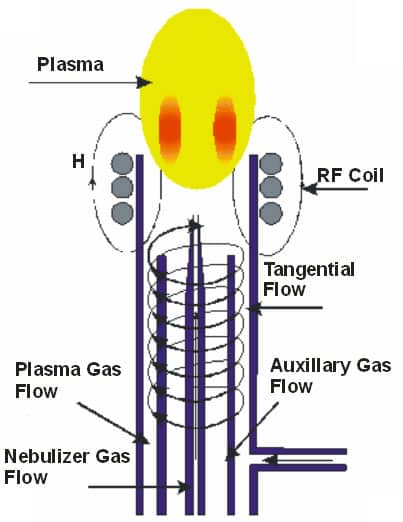
Compares flame and plasma excitation sources for trace metal analysis, covering temperatures and why plasma gives a wider linear range and less interference.
ICP – MS provides trace element concentrations in ppb and sub- ppb level concentrations. The analysis normally requires dissolution of solid sample in solution prior to analysis.
ICP-MS is a well established technique capable of giving highly reliable results day after day for years together.
ICP-MS is a versatile and established technique for trace metal analysis for elements ranging from Li to Uranium. Read more about ICP-MS interferences and removal.
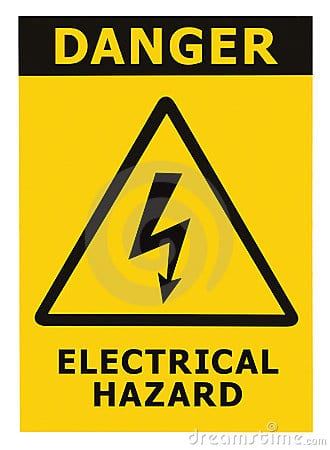
The ICP-MS generates high intensity UV radiation. A safety interlock automatically shuts off the plasma source if the sample compartment is opened during operation.
The present article will help you decide between ICP-OES and ICP-MS based on your budget and analysis requirements.
This has opened up new avenues and applications of sophisticated techniques such as Graphite furnace AAS,ICP-OES, ICP-MS, Nuclear activation analysis , X-Ray Fluorescence and Isotopic Dilution Mass Spectroscopy.
Trace metal analysis is referred to as analysis of elements in different matrices at levels below one ppm. The article Which technique should I use for trace metal analysis is a refresher on the common techniques used for trace metal analysis.
ICP – MS has earned a top position and has been acclaimed as a reliable and highly accurate option. The reasons for this have already been covered in the referenced articles.
The commonly accepted Elemental Analysis technique providing acceptable levels of precision and accuracy areAAS, ICP – OES and ICP – MS.
What are the benefits offered by ICP-MS over ICP -OES technique for trace metal studies.