
What Are Chromophores and Chromophoric Shifts? | Lab Training
A chromophore is the functional group within a molecule responsible for its ability to absorb light in the UV-visible spectral range and thereby produce colour, and a chromophoric shift is a change in the wavelength or intensity of that absorption caused by alterations in the molecule’s environment or structure.

Colour bearing laboratory solutions
Have you ever wondered why some compounds are colourless whereas some are coloured. The answer lies in the presence or absence of chromophores. A chromophore has a functional group present in a molecule that is capable of electronic transitions in the UV – VIS spectral range resulting in colour of a compound.
Types of Chromophores
Commonly three types of compounds show colour characteristics, namely, organic, inorganic and complex forming compounds resulting from charge transfer between metals and ligands.
Organic Molecules
An organic molecule absorbs light in the UV - VIS region depending on its molecular structure. Electronic transitions take place between the ground state and the excited electronic states of molecules having some degree of unsaturation or a heteroatom.
Transitions in the UV region are generally not accompanied by colour changes whereas those in lower energy visible region are capable of producing colour changes.
Some examples of chromophores are
| Nitro | 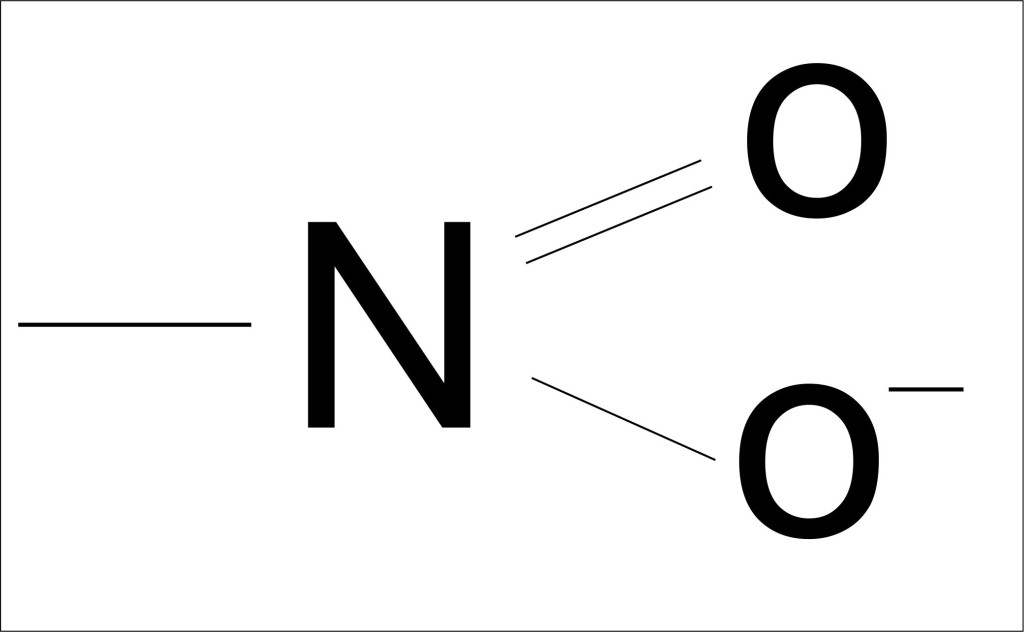 |
| --- | --- |
| Azo |
|
| --- | --- |
| Azo |  |
| Azoxy |
|
| Azoxy |  |
| Carbonyl |
|
| Carbonyl | 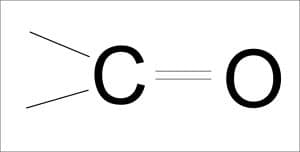 |
| Thiocarbonyl |
|
| Thiocarbonyl | 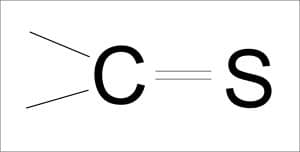 |
|
Inorganics
Inorganic compounds containing atoms with electrons in d-orbitals give weak absorptions in the visible region. Metals in transition series are often coloured on account of such transitions, e.g., blue colour of aqueous copper sulphate solution
Charge Transfer Complexes
In some cases a compound is colourless naturally but in presence of a complex forming agent becomes coloured. In such cases one speices is an electronic donor group and the other is an electron acceptor.On interaction the charge transfer complex formed is intensely coloured, e.g., a blood red complex is formed when a Fe³⁺ combines with SCN⁻² .Tthe complex formed absorbs light resulting in transfer of an electron from SCN⁻¹ to Fe³⁺ .
Chromophoric Shifts
You would have often observed that the colour of a compound deeperns or fades when either the environmental conditions are changed or on reaction with other species. In such situations chromophoric shifts take place.
Bathochromic Shift (red shift) results in shift to longer wavelengths i.e. colourless to the colour or deepening of colour. Examples – increase in conjugation or increase in number of aromatic rings can result in colouration or deepening of colour. The increase in intensity is referred to as hyper chromic effect
Hypochromic shift (blue shift) is a shift of absorption to shorter wavelengths resulting in a coloured solution becoming colourless or a deep colour to become lighter. The fading of colours is also referred to hypsochromic effect.
What is a chromophore?
A chromophore is a functional group within a molecule capable of undergoing electronic transitions in the UV-visible spectral range, and its presence or absence determines whether a compound appears colored or colorless.
What is a bathochromic shift?
A bathochromic shift, also called a red shift, is a shift of a compound's light absorption to longer wavelengths, which can turn a colorless compound colored or deepen an existing color; it is often caused by increased conjugation or a greater number of aromatic rings.
What is a hypochromic shift?
A hypochromic shift, also called a blue shift, is a shift of absorption to shorter wavelengths, causing a colored solution to become colorless or a deep color to fade; this fading is also referred to as the hypsochromic effect.
What are the main types of chromophores?
Chromophores are commonly grouped into three categories: organic compounds, whose color arises from electronic transitions involving unsaturation or heteroatoms; inorganic compounds, particularly transition metals with d-orbital electrons; and charge-transfer complexes, formed when an electron donor and acceptor species interact.
Why do transition metal solutions often appear colored?
Transition metals often appear colored because their atoms contain electrons in d-orbitals that give rise to weak absorption in the visible region, as seen in the characteristic blue color of aqueous copper sulfate solution.