
What is chromatography?
Chromatography is an analytical separation technique that uses a mobile phase to carry a mixture through a stationary phase, exploiting each component’s differing affinity for the two phases to separate, identify, and quantify the individual compounds.
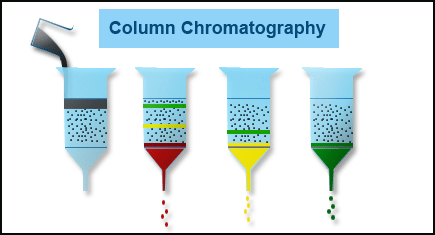
If you work in the chemical industry, you must have heard about the technique of chromatography. Despite being a common procedure, many people still aren’t familiar with what is chromatography and how exactly it works. If you are also confused about the topic, you have come to the right place. This article includes all the details about chromatography. Let’s get started with the meaning and definition of chromatography.
Meaning of Chromatography
As per dictionary definition Chromatography is a method for separating the constituents of a solution(gas or liquid) by exploiting the different properties of different molecules. The technique employs a mobile phase(gas or liquid)to transport the solution to be analyzed through the stationary phase (solid or liquid)which absorbs or impedes different components of the solution to different degrees and thus causes their separation as different layers. It is an invaluable tool in the hands of analytical scientists for the separation and quantification of components in a mixture of organic compounds.
History and Basics of Chromatography
The technique had its origins in the pioneering work of Mikhail Tswett who separated plant pigments in 1900 using a packed glass column. As the separated pigments were differently coloured and separated as distinct bands the technique was coined as chromatography meaning separation by colours.
Over the years chromatography has evolved and advanced into versions such as HPLC, GC, HPTLC and SFC all of which to this day are based on the separation of mixture components through selective physico-chemical interactions and partitioning between the stationary and mobile phases.
Why Do We Use Chromatography?
Since its evolution chromatography has found wide use in separation of components of mixtures ranging from simplest gases to most complex hydrocarbon mixtures containing hundreds of different compounds. Samples can be gaseous, liquids or even solids which are readily soluble in suitable solvents.
Due to its versatility the applications cover complete range of chemical compounds having diverse characteristics such as boiling range, molecular weights, volatilities, and thermal stabilities. Gas chromatography, Liquid chromatography, Thin-layer chromatography, Super critical fluid chromatography and hyphenated techniques such as GC – MS, and LC – MS cover a vast number of applications in diverse areas such as pharmaceuticals, material development, foods, petroleum products and forensic investigations requiring very high resolution and detection limits.
A few application of chromatography in different industries are:
Chemical Industry
- Contaminants’ detection in pesticides and oils
- Water sample testing
- Air quality checks
- Numerous applications in life sciences
Pharmaceutical Industry
- Taking element composition and its molecular weight to separate compounds
- During the process of drug development
- Detecting chemicals or trace elements in various samples with proper analysis
- Examination of mixture purity
- Identification of unknown compounds
Forensic Industry
- Blood and hair sample analysis under crime scene testing
- Forensic pathology
Food Industry
- Identifying the food products’ nutritional values and quality
- Detection of additives and food spoilage
Molecular Biology Studies
- The fuel industry, biochemical processes, and biotechnology use HPLC for purification and fractionation process
- Metabolomics and proteomics study through specific chromatography techniques
- Nucleic acid research with specific chromatography methods
These are only the popular applications of chromatography. The technique is used in various other places and industries.
Basic Working of Chromatography
The exact process of chromatography will depend on where you want to use it and which method you opt for (these will be explored later in the article). However, we can still define a basic procedure that consists of simple four steps:
- Step 1: Careful exposure of a specific analyte amount to the mobile phase stream that was already running.
- Step 2: Then, the analyte is carried out through the stationary phase with the help of the mobile phase.
- Step 3: Finally, the separation takes place when the analyte components react with the stationary phase at different levels. Some of them react more, while others don’t.
- Step 4: The separated out analyte components are then again carried out by the mobile phase. It then takes the components to a separate instrument. There, they get quantified with the proper detection of their presence.
And in these four steps, the process gets complete. We can say that chromatography is divided into three basic components: Mobile Phase, Stationary Phase, and Separated Molecules.
Let’s now get into the details of the use of different parts of chromatography.
Chromatography Parts
The four steps aren’t enough to understand how chromatography works. You also need to know about the different elements of the process, along with their working. Only then will you be able to learn the concept.
Chromatography Columns
Separation of sample components before detection is the essence of chromatographic techniques. A chromatographic system uses a column to achieve the desired separation. A column comprises of a tube packed with a stationary phase on which separation takes place based on physico – chemical interactions of separating compounds with the stationary phase. The mobile phase or the carrier gas elutes less weakly retained components first followed by more strongly retained components.The column dimensions and composition is based on the chromatographic technique selected and the degree of required separation. In general HPLC columns are shorter and wider than GC columns.
Chromatographic Detectors
After separation the individual components reach the detector which provides response in terms of the area or peak height depending on the amount of the eluting compound. Each chromatographic separation technique offers a range of detectors depending on the nature of eluting compounds.
Detection can be specific for a particular compound or a range of compounds or it can depend on some physical properties such as reflective index of the mobile phase. Such detectors are referred to as bulk property detectors in comparison to selective or specific detectors.
Chromatographic Data
Chromatographic separations appear as peaks in the chromatogram except for thin-layer chromatography for which separate zones are seen on the plate. Chromatographic peaks are separated in time in the chromatogram depending on the nature of separating compounds and the separation efficiency of the column. Sharp well resolved peaks indicate high degree of column resolution whereas broad or overlapping peaks are indicative of poor resolution.
Each peak represents a sample component and is characterized by its retention time under defined operating conditions. For purposes of quantification the peak height or more accurately the area under the peak defines the amount of the component present in the mixture.
Quantitation methods require percentage composition of a particular component in the mixture and such estimations are made on the presumption that the detector responds to all the components equally and peaks are generated for each compound.
%of analyte = (Area of analyte peak)/(sum total area of all peaks)X100
Quite often the amount of analyte is specified in relation to another compound which is referred to as a reference standard having established traceability. Such compounds should be available in pure form and have chemical identity which is same or close to the identity of the analyte to be determined.
Modern-day analytical systems come equipped with sophisticated application softwares which are capable of operational control, data interpolation and calculations to achieve the desired results.
Common Chromatography Methods
A few general chromatography methods that are divided based on the separation basis of the elements are:
- Column Chromatography
- Affinity Chromatography
- Thin-Layer Chromatography
- Ion-Exchange Chromatography
- Gas Chromatography
- High-Pressure Liquid Chromatography (HPLC)
- Paper Chromatography
- Gel-Permeation Chromatography (Molecular Sieve)
- Dye-Ligand Chromatography
- Pseudo-Affinity Chromatography
- Hydrophobic Interaction Chromatography
Now you have the answer to the basic question ‘What is chromatography?’you will be eager to know more about the chromatographic techniques .Simply register to our free courses and advanced certificate programmes listed under courses on the main menu.
What is chromatography used for?
Chromatography is used to separate, identify, and quantify the components of a mixture. It has wide industrial applications, including detecting contaminants in pesticides and oils, testing water and air quality, identifying compounds during pharmaceutical drug development, analyzing blood and hair samples in forensic investigations, and checking nutritional quality and detecting spoilage in food products.
What are the basic components of a chromatography system?
A chromatography system is built around three basic components: the mobile phase, which carries the sample; the stationary phase, which the sample interacts with inside the column; and the separated molecules that result once the mixture's components move through the system at different rates.
What are the main types of chromatography?
The main types include column chromatography, thin-layer chromatography, paper chromatography, ion-exchange chromatography, gas chromatography (GC), and high-performance liquid chromatography (HPLC), along with gel-permeation and affinity chromatography. Each method separates mixtures using the same underlying principle but different combinations of stationary and mobile phases.
Who discovered chromatography?
Chromatography originated from the work of Russian botanist Mikhail Tswett, who in 1900 used a packed glass column to separate plant pigments. Because the separated pigments appeared as distinctly colored bands, he named the technique chromatography, meaning separation by color.
What is the basic working principle of chromatography?
Chromatography works in four basic steps: the sample is introduced into a flowing mobile phase, the mobile phase carries it through the stationary phase, the components separate as they interact with the stationary phase to different degrees, and the separated components are carried onward to a detector for identification and quantification.