
What is HPLC?
HPLC, or High Performance Liquid Chromatography, is an analytical technique used for separation of components of an organic mixture of compounds, particularly those that are nonvolatile, thermally unstable and have relatively high molecular weights.
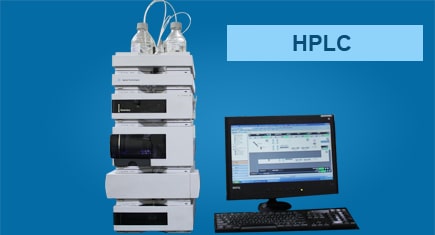
What is HPLC? High Performance Liquid Chromatograph
The basic question that needs a simple answer is “What is HPLC?” In simple terms HPLC is an analytical technique used for separation of components of organic mixture of compounds when such compounds are nonvolatile, thermally unstable and have relatively high molecular weights.
A liquid carrier stream termed as the mobile phase serves to carry the injected sample through the separation column and to the detector. In the separation column the individual components are separated on the basis of physico – chemical interactions and the elution order is based on such interactions. The separated components are detected by the detector on the basis of absorption of light or changes in refractive index, electrochemical/conductivity changes or simply the size distribution of eluting molecules.
Detector response is in the shape of peaks having area in direct proportion to the amount present. The output is monitored and evaluated by the operating software which not only does required calculations on response but also supports operating parameters like injection volume, injection sequence, detection wavelength, wash cycles, etc.
Today the advanced features of available softwares have made operation highly user-friendly. Majority of time spent by user is in mobile phase preparation, preparation of buffers and standards and making record entries. Joining the Certificate Programme on HPLC could be a right decision to gain an insight and get a satisfying answer to your question “What is HPLC?”
Separation sciences have contributed immensely to growth and understanding of analytical chemistry and a better control over quality of consumer products such as pharmaceuticals, foods and beverages, polymers, environmental monitoring, etc. Major credit goes to chromatographic techniques and HPLC in particular.
Our experience in commercial testing of products made us realize the potential application and scope of HPLC and this encouraged us to share our skills with other users and newcomers to the field of analytical chemistry. With this objective we decided on launch of free e–learning course followed by a comprehensive Certificate Program on HPLC.
In the past few months we have uploaded several blogs covering different operational aspects of HPLC. The blog on What really goes into running a HPLC : infographic highlights that HPLC operation is not just grasp of a few operational commands and interpretation of results but an understanding and practice of the 18 steps that we feel will transform you from novice to an expert in the understanding and operational aspects of HPLC.
To learn more about HPLC you can join our courses, click here to learn more about the courses we offer.
What is HPLC?
HPLC, or High Performance Liquid Chromatography, is an analytical technique used for separation of components of an organic mixture of compounds, particularly those that are nonvolatile, thermally unstable and have relatively high molecular weights.
What is the role of the mobile phase in HPLC?
A liquid carrier stream termed the mobile phase carries the injected sample through the separation column and to the detector, where individual components are separated based on physico-chemical interactions that determine their elution order.
How does an HPLC detector identify separated components?
Components are detected based on absorption of light, changes in refractive index, electrochemical or conductivity changes, or the size distribution of eluting molecules, with the detector response appearing as peaks whose area is directly proportional to the amount present.
What does the operating software of an HPLC system control?
Modern HPLC operating software performs calculations on detector response and also supports operating parameters such as injection volume, injection sequence, detection wavelength and wash cycles.
Where does most of an HPLC operator time actually go?
The majority of an operator time is spent on mobile phase preparation, preparation of buffers and standards, and making record entries, rather than the instrument operation itself.
In which industries is HPLC commonly applied?
HPLC is widely used in quality control of consumer products, including pharmaceuticals, foods and beverages, polymers, and environmental monitoring.