
Advances in HPLC Stationary Phases in Monolithic HPLC columns
A monolithic HPLC column is a chromatographic stationary phase cast as a single continuous, porous, silica- or polymer-based rod rather than a bed of packed particles, offering high permeability, large surface area, and multiple flow pathways for solute separation.
Stationary phases for HPLC have evolved from irregular particles to spherical particles to sub- 2μm size particles and core shell technologies. Parallel advances have been seen in development of monolithic packings.
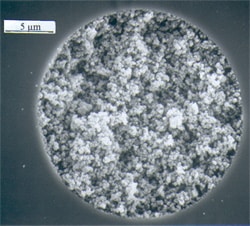
Credit : The Barnett Institute of Chemical & Biological Analysis
A monolith can be visualized as a ‘ solid rock’ like structure with no interstitial spaces. These offer shorter diffusion distances and multiple pathways for solute dispersion. The porous rod-like structure is highly permeable and provides large surface area for separation in comparison with particle-based stationary phases. Monolithic columns are either silica-based or have organic polymer backbones.
Historical
Richard Synge in 1952 conceptualized monolith as a continuous block of porous gel. The idea picked up in 60s and 70s when polyurethane foams were introduced. It was only in the late 1980s that hydrophilic gels and silica rods were developed.
Advantages over particulate phase HPLC columns
- Monoliths with high permeability offer a large number of flow channels and high contact area. These features offer several advantages over particulate stationary phases.
- Reduction of particle size is accompanied with increase in column backpressure and you are forced to use more expensive UHPLC systems. Backpressure problems are easily overcome when using monolith HPLC columns.
- Monoliths are ideally suited for separations of large molecules as such molecules do pose backpressure complications in particulate columns
- In– situ polymerized monolith columns avoid column to column variability as well as mobile flow variations due to wall effects are minimized.
- Monolith HPLC columns are more rugged and exhibit mechanical robustness in comparison to particle packed columns.
- Particle packed columns need a solvent environment and any exposure to air results in drying out which can cause irreparable damage. Such problems are not encountered by monolith columns.
- Monolith HPLC columns have extended useful life-cycle in comparison with particulate columns due to increased shock resistance, increased temperature tolerance and ability to withstand wider pH range media.
Key application areas
Due to the multitude of advantages monolith HPLC columns hold promising scope for applications in biotechnology covering specialized fields such as genomics, proteomics, metabolomics and pharmacogenomics. Fast response and high resolution of large molecules has made possible chromatographic real-time monitoring of fermentation processes. Pharma, foods, forensics and clinical studies are other areas where monolith columns will hold promise in the coming time.
Nano HPLC is another area where monolith columns are having a future potential. Permeability of monolith packing circumvents the backpressure problem encountered with sub 2-μm packings and it is possible to use very low ID columns of the order of 20 μm with long column lengths.
Suppliers of monolith HPLC columns
BIA separations first introduced polymeric monoliths HPLC Coloumns followed by Merck which developed and produced silica monoliths with its Chromolith product line.The product line was subsequently passed on to Phenomenex which also introduced the Onyx line in 2005. Dionex pioneered polymer monoliths and presently some sources can be accessed through the links below :
Monolith columns holds great promise in the future. In case you have had exposure to such columns please do share your experience and leave your comments.