
Why are HPLC columns shorter than GC columns?
HPLC columns are shorter than GC columns because HPLC’s liquid mobile phase is far more viscous than GC’s carrier gas and so encounters greater flow resistance over a given column length; as a result, analytical HPLC columns are typically 15 to 25 cm long, while GC columns range from about 1.5 m for packed columns to 10 to 100 m for capillary columns.
HPLC and GC are separation techniques which have gained a strong foothold in chemical laboratories. The basic purpose of both techniques is to separate and quantify the components of organic mixtures.
Have you ever wondered why HPLC columns are shorter and broader than GC columns. Before you answer this question you should understand the benefits of long column lengths. As the column length increases the interaction time between the eluting compounds and stationary phase increases thereby increasing column efficiency and resolution. This results in well separated peaks. However, the column length cannot be increased indefinitely due to practical problems faced due to increased column head pressure and also increase in analysis time.
HPLC columns
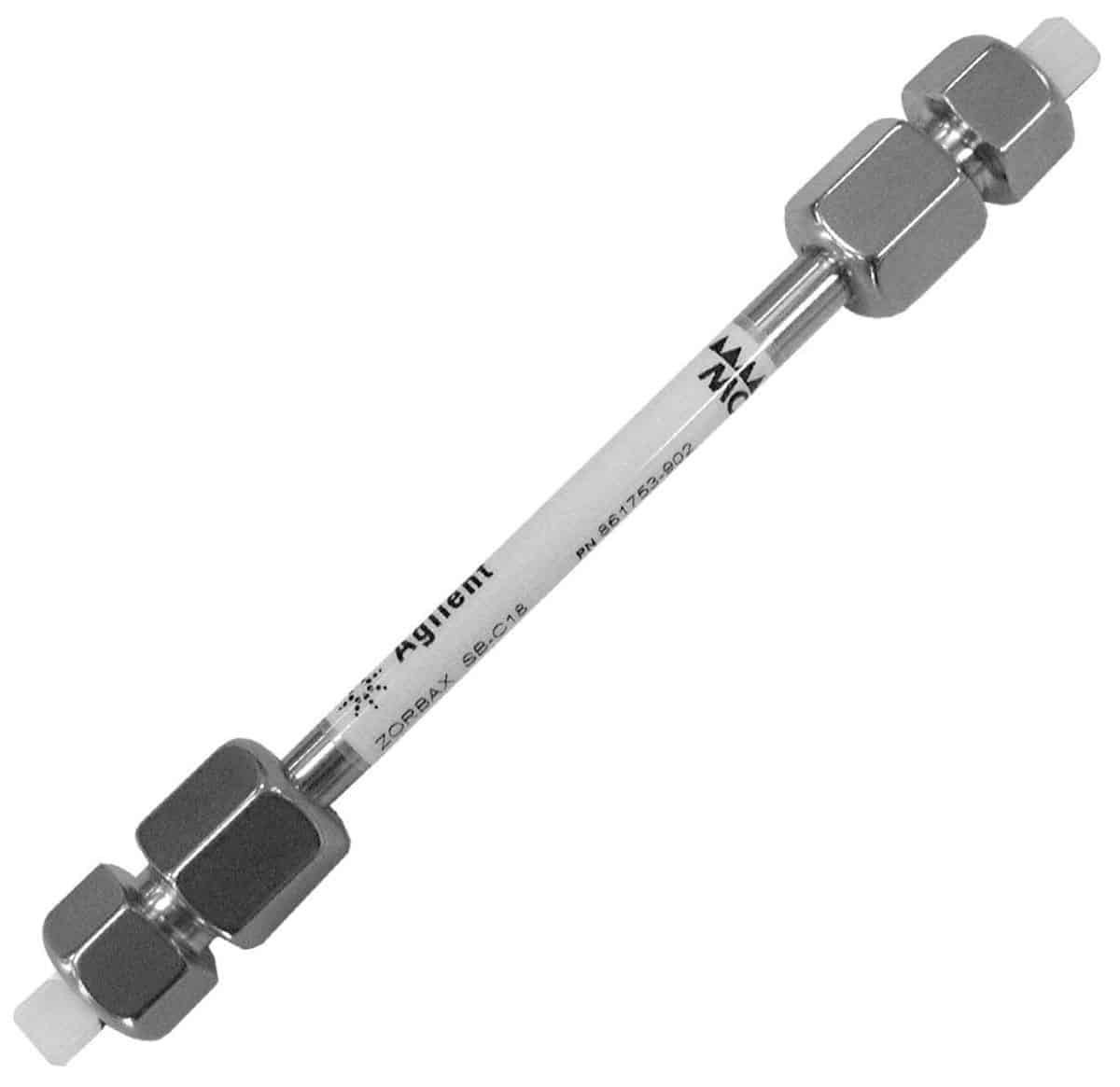
HPLC Column
The dimensional requirements of HPLC columns depend on the separation objectives. Usual analytical applications require columns of length 15 – 25 cms with 4.6 mm id whereas preparative columns can be broader with diameters ranging from 20 – 50 mm.
GC columns
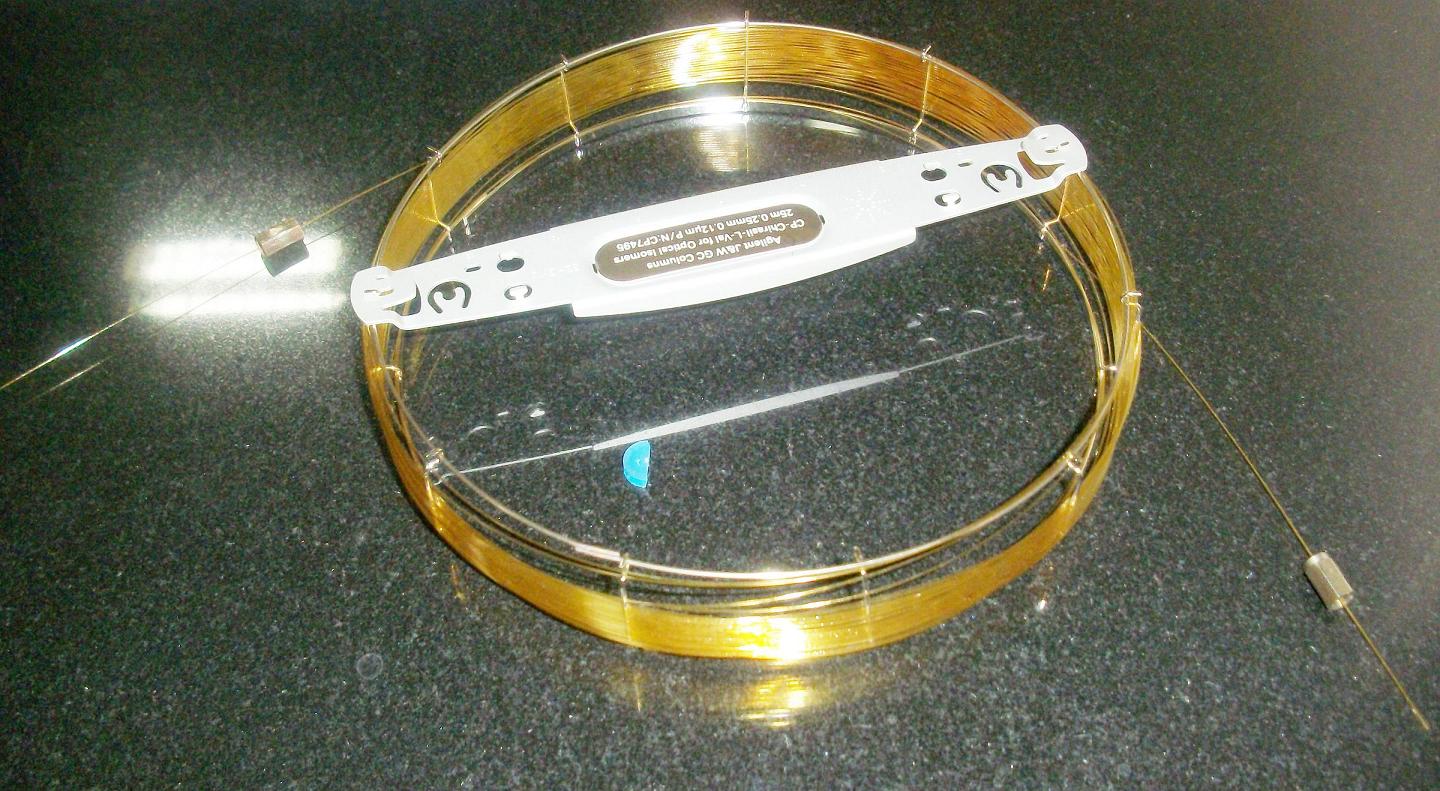
GC Capillary Column
GC columns are basically classified as packed columns and capillary columns. Packed columns are generally about 1.5 m or 6ft long and 1/8” or 3.2mm outer diameter.. Capillary columns on the other hand are several meters in length(10-100m). Packed columns are made of glass or stainless steel whereas capillary columns are made of fused silica flexible tubing. Flexible tubing permits accommodation of long length columns as circular coils into the column oven
Now examine the difference in the separation process in the two techniques to arrive at logical answer to the basic question on length differences between GC and HPLC columns..
Nature of mobile phase – the first and foremost reason is nature of carrier fluid termed as mobile phase. HPLC uses a liquid as a carrier of sample through the column whereas in GC a gas stream serves to carry the sample. Liquids have higher viscosity than gases and therefore encounter greater resistance during passage through the column. The longer the column greater will be the resistance to flow of mobile phase therefore HPLC requires shorter column lengths
Sample volatility – the sample injected into the HPLC is a liquid whereas in GC it can be either a liquid or a gas. However, before entering the GC column: liquids get converted to vapours due to high temperature in the injector block. A gas encounters less resistance in the GC column which permits use of longer column lengths.
Sample stability – samples analysed by HPLC are generally thermally labile so they are in liquid phase in the HPLC column at room temperatures. On the other hand samples entering the GC column are gases having lower molecular weights and boiling points. Such compounds are easily vaporized and remain as gases during passage through the column.
Further reduction in column length particularly in new UHPLC applications have resulted in accelerated analysis with improved sensitivity.Future trends in analytical applications are bound to reduce HPLC column lengths and analysis time from several minutes to a few seconds.