
Advantages of Gas Chromatography (GC) over Thin Layer Chromatography (TLC)
Gas chromatography (GC) is a separation technique that resolves volatile compound mixtures with a level of resolution, speed, sensitivity, and quantitative accuracy that thin layer chromatography (TLC), a simpler plate-based separation method, cannot match.
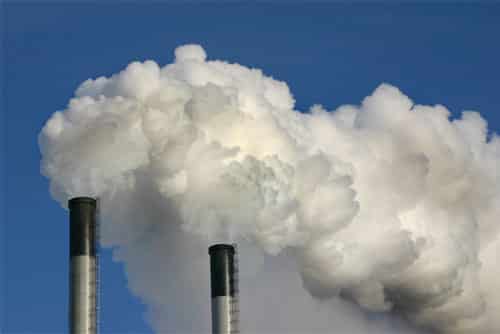
Smoke comprising of multicomponent compounds
Chromatography is a separation science which has made remarkable contributions to advances in fields such as pharmaceuticals, foods, nutraceuticals, environmental monitoring, forensics, cosmetics and life sciences. The potential for applications are enormous and new ones are being reported on an impressive scale.
Chromatography evolved over the years from simple column chromatography to paper chromatography to thin layer chromatography and to instrumental techniques such as Gas Chromatography and HPLC.
The present article will focus on the advantages of gas chromatography over the thin layer chromatography techniques.
Degree of resolution
Gas chromatography has the capacity to resolve the components of complex mixtures of compounds such as petroleum fractions or smoke which can contain hundreds or even more components in a single sample
Such complex resolutions are virtually impossible using TLC techniques.
Improvement of resolution
Freedom to control operational parameters such as temperature programming, carrier gas flow rate, adjustment of split ratios can help resolve closely appearing peaks. It is not easy to resolve closely appearing or overlapping bands or spots in thin layer chromatography techniques.
Speed of analysis
It is very convenient to change the operational parameters even during the chromatographic run to achieve optimum resolution in the shortest possible time. This option is not available during the plate development stage in thin layer chromatography. The analysis using gas chromatography is usually completed in minutes in comparison to longer period required for TLC chromatographic separations
Wide choice of samples
Gas chromatography is ideally suited for analysis of volatile compounds. Samples with boiling points as high as 380 to 400°C can be analysed by temperature programming. The samples can range from liquids, gases and dissolved solids. TLC techniques, however, cannot be used for analysis of gases.
Fully Quantitative Technique
GC is a fully quantitative technique with software capable of providing accurate data such as peak area counts for quantitative estimations. The TLC technique requires subsequent treatment of the spots such as dissolving in suitable solvent or extraction for subsequent spectrophotometric determinations. Accessories such as densitometers provide high accuracy but these require additional cost.
High sensitivity
Gas chromatography offers a full range of detectors such as flame ionization detector(FID), thermal conductivity detector (TCD), electron capture detector(ECD), nitrogen phosphorus detector(NPD), mass selective detector(MSD), flame photometric detector (FPD) which offer very low detection limits for specific compounds having hetero atoms such as halogens,nitrogen, phosphorus and sulphur. Such levels of detection are not possible on TLC determinations
Software capabilities
Gas Chromatography software is capable of the normalization, peak and baseline optimization which leads to substantial improvements and reporting of results in real-time. Such real-time control of parameters is not possible during TLC separations.
Choice of columns
GC columns are available over a range of diameters and lengths ranging from little over 1 m to several meters (packed and capillary columns) along with a wide range of solid and liquid support phases. This offers a wide choice of applications for different types of separations
Storage of analysis records
Permanent storage of chromatograms is possible both as hard and soft copies. On the other hand TLC plates cannot be stored indefinitely due to fading of spots with time and requirement of proper storage conditions. It is, however, possible to take pictures of developed plates and maintain permanent reports but this involves extra cost
Option for nondestructive testing
GC offers a large choice of detectors some of which like TCD and FPD are nondestructive in nature. The output stream after detection on these detectors can be led to more sensitive detectors such as MSD or FT-IR.
Derivatization
Gas chromatography offers the option of derivatization of the original compounds through reactions such as silylation, alkylation and acylation for improved sensitivity of detection.
Column Reuse
Gas chromatography columns do not require to be discarded after every single analysis as in case of thin layer chromatography where plates need to be replaced after each and every analysis. However, it is essential to take the recommended precautions on use and storage as advised by the column manufacturer and keep a check on the theoretical plate count from time to time. The column will require reconditioning or replacement if the number of plates falls below a specified value.
HPLC like GC offers several advantages over TLC which would be taken up in a subsequent article.
What are the main advantages of gas chromatography over TLC?
Gas chromatography (GC) offers much higher resolution for complex mixtures, faster analysis measured in minutes, fully quantitative results based on peak area, a wide choice of highly sensitive detectors, and reusable columns, capabilities that thin layer chromatography (TLC) cannot match.
Can TLC analyze gas samples?
No. TLC cannot be used to analyze gas samples, whereas gas chromatography is specifically suited to analyzing gases as well as liquids and dissolved solids, including compounds with boiling points as high as 380 to 400 degrees Celsius when temperature programming is used.
Why is gas chromatography considered more sensitive than TLC?
Gas chromatography offers a range of highly sensitive detectors, including flame ionization, thermal conductivity, electron capture, nitrogen phosphorus, mass selective, and flame photometric detectors, achieving very low detection limits that are not achievable with TLC.
Can gas chromatography columns be reused?
Yes. Gas chromatography columns can be used repeatedly for significant periods if properly maintained and not overloaded, whereas TLC plates must be replaced after every single analysis.
Is gas chromatography a fully quantitative technique?
Yes. Gas chromatography software can report accurate, precise quantitative data directly from peak area counts, while TLC requires additional steps such as dissolving or extracting spots for spectrophotometric determination to achieve quantitative results.