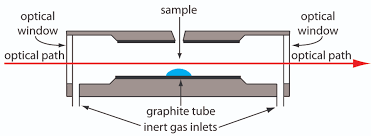
Why Graphite Furnace Atomization gives higher sensitivity over Flame Atomization
Explains why graphite furnace atomization achieves detection limits 10 to 1,000 times lower than flame atomization through longer residence time and heat.
Browse all AAS articles, guides, and protocols.
Explains why graphite furnace atomization achieves detection limits 10 to 1,000 times lower than flame atomization through longer residence time and heat.
Compares acid digestion, fusion, and ashing for preparing samples for Atomic Absorption Spectroscopy, weighing safety, reproducibility, and time efficiency.
Safety guidance for laboratory digestions, covering solvent selection for organics and safe handling of acids, including perchloric and hydrofluoric acid.
Direct solid sampling introduces powders and soils into the AAS graphite furnace, cutting digestion time and cost while reducing contamination risk.
Maintenance guidance for AAS graphite furnace systems, covering checks of the graphite tube, gas supply, light source, and contact rings for reliable results.
Practices for preventing contamination in trace metal laboratories, covering sampling, storage, sample preparation, and environmental controls.
Maintenance tips for the AAS flame assembly's nebulizer, spray chamber, and burner head to extend service life and improve result reliability.
Covers sample collection, storage, and transportation practices for water analysis by Atomic Absorption Spectroscopy to ensure a representative sample.
Explains how Atomic Absorption Spectroscopy of used lubricating oil detects wear metals like chromium, copper, iron, and lead in engine components.
Explains how Atomic Absorption Spectroscopy skills open career paths in mining, environmental monitoring, pharmaceuticals, food safety, and forensics.
In this article, we discussed about Vapour Generation – an alternative technique in Atomic Absorption Spectroscopy. Advantage of the technique is enhanced sensitivity.
Preventive maintenance is the key to ensure high uptime of your Atomic Absorption Spectrometer
Trace metals are routinely analysed in ppm and ppb or even sub- ppb levels using conventional flame and graphite furnace Atomic Absorption Spectroscopy techniques
Water is the safest solvent that you can be use in Atomic Absorption Spectroscopy but many applications require use of organic solvents.
Water is a universal solvent and is used in a majority of Atomic Absorption Spectroscopy applications
Atomic Absorption Spectroscopy requires two main gases, namely, air as oxidant and a fuel gas such as acetylene or nitrous oxide.
AAS Spectroscopy provides cost-effective analysis of trace metals in a vast range of samples both natural and man-made such as geological samples, foods, plants, agricultural samples, soils, rocks, biological specimens, manufacturing streams, industrial effluents, pharmaceuticals and drinking water.
The Certificate course on Atomic Absorption Spectroscopy is designed keeping the requirements of the working chemist in mind.
Sample dissolution has been a challenge for the analytical chemist. Dissolution of samples such as minerals, ores, rocks, soils, ceramics, etc.
Trace metal analysis by AAS or ICP techniques requires introduction of sample into the system in the liquid form.
You shall be pleased to know that the Certificate course on Atomic Absorption Spectroscopy is launched.
www.lab-training.com launches its Certificate Program on Atomic Absorption Spectroscopy
Attempt the multiple answer choice quiz which will help you evaluate your level of understanding of Atomic Absorption Spectroscopy and will inspire you to k
A grating is an optical element in a monochromator that disperses the broadband light beam into distinct wavelengths in AAS Spectrometers