Importance of Colour Coding for Gas Cylinders in Laboratories
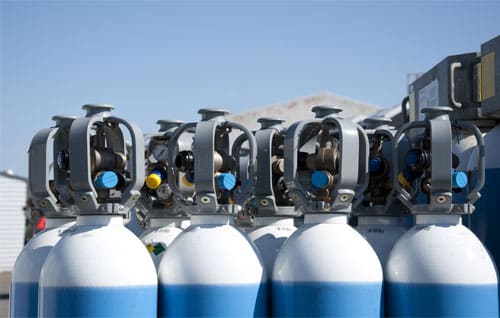
It is important for all laboratories to prominently display colour code charts in workplace, in gas storage space so as to familiarise the workers with hazards of gases.
All articles from Lab Training, covering chromatography, spectroscopy, microbiology, and analytical method validation, in order of publication.
It is important for all laboratories to prominently display colour code charts in workplace, in gas storage space so as to familiarise the workers with hazards of gases.
Laboratory information management system (LIMS) is customized software designed to support operations of a laboratory.
The present article discusses 10 key features which are common to HPLC and GC techniques. These features will recollect your basic understanding of chromatography.
HPLC and GC are established techniques used in academic and industrial laboratories. A thorough understanding of their differences is helpful in making the right choice for your sample analysis.
Special emphasis was placed on hands on training for sample testing under sterile conditions and procedures adopted for sterile room qualification.
A comparison on characteristic features of HPLC that make it score over TLC. Click here to read more about the advantages of HPLC over Thin-layer Chromatography.
Gas Chromatography has a distinct edge over Thin Layer Chromatography .It affords highest resolution and sensitivity for complex mixtures through choice from a vast range of columns, detectors and control over operational parameters.
Thin layer chromatography offers several benefits over the paper chromatographic separations some of which are highlighted in this article.
Thin Layer chromatography presents a low cost, simple and sensitive option for identification and estimation of individual components in a mixture of components.
The advantages offered by supercritical fluid chromatography are briefly discussed in the present article. Read more.
Useful tips on care of HPLC columns have been suggested earlier to preserve the performance features and improve useful life of your column.
The basics of Liquid- Liquid Chromatography is to partition solutes between two immiscible liquid phases- one phase being the mobile carrier and the other being the thin liquid layer supported on the inert stationary phase packed inside the column.
The present article discusses some processes that can help in inducing fluorescence to otherwise non- fluorescent inorganic species.
Fluorimetric techniques provide specific and rapid analytical solutions which is a great boon to medical diagnosis as future course of action often depends on availability of reliable and accurate results in the shortest possible time.
Fluorescence spectroscopy provides a fast and precise means of monitoring of environmental pollutants in atmosphere and water.
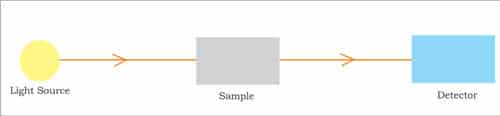
The basic Absorbance and Luminiscence spectroscopic measurements system components are same for both the techniques.
Analysis based on fluorescence characteristics of materials by fluroimetric analysis is a highly sensitive technique. At lower concentrations (ng levels or lower) the technique shows higher sensitivity in comparison to UV – Vis spectroscopy.
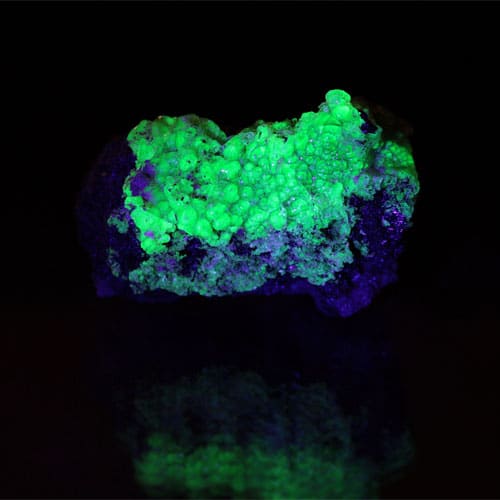
Theoretically speaking all the terms mean the same and describe emission of light by substances not involving high temperatures.
Several compounds show fluorescence characteristics due to their molecular structural features.
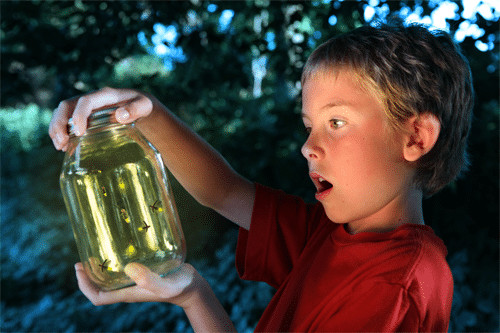
Fluorescence in natural species must have left you bewildered in earlier days. Bioluminescence refers to luminiscence arising from some living organisms or from some compounds extracted from such organisms.
A wealth of information is provided by spectroscopic techniques as the expanse of electromagnetic spectrum is immensely vast and it offers a multitude of different wavelengths for such interactions to the chemical spectroscopist.
Preventive maintenance is the key to ensure high uptime of your Atomic Absorption Spectrometer
Trace metals are routinely analysed in ppm and ppb or even sub- ppb levels using conventional flame and graphite furnace Atomic Absorption Spectroscopy techniques